
Table of Contents
ToggleSyracuse Elder Law Attorney
LET’S TALK ABOUT HOW WE CAN WORK TOGETHER
Ready to Move Forward? Schedule a Telephone Conference Today







Planning for aging parents or managing your own future care involves decisions that affect your family’s finances, healthcare, and legal rights. Elder law addresses the legal and financial challenges seniors face, including long-term care planning, Medicaid applications, guardianship, and estate planning.
Central New York estate planning attorneys Frederick P. Davies and William P. Davies of Davies Law Firm have guided Central New York families through Medicaid planning and elder law matters for decades. The firm has helped Onondaga County families preserve assets while qualifying for benefits that cover nursing home and assisted living costs. Our Syracuse elder law attorneys work with the Onondaga County Department of Social Services and understand the local Medicaid application process. Proper Medicaid planning can prevent unnecessary spend-down of life savings while ensuring access to quality care.
This guide explains what elder law covers, when to create powers of attorney, how Medicaid eligibility works in New York, what guardianship involves, and how special needs trusts work. You will also learn about recognizing elder abuse, preserving assets during the Medicaid look-back period, veterans’ benefits for long-term care, and when to seek legal guidance. Call Davies Law Firm at (315) 472-6511 to speak with Frederick P. Davies or William P. Davies about your family’s situation.
Over 10,000 PEOPLE Have Trusted Davies Law Firm
Contacted the Davies Law firm regarding our Estate Plan. Fred Davies thoroughly explained the intricacies of Living Will, Health Care proxies, Medicaid qualifications for Nursing Homes and provided guidance for…

I went to Davies’ Estate Planning Seminar with the not so positive attitude that I sometimes have…The seminar was extremely throughout and professionally presented. I decided …

I needed some legal advice about my grandfathers home, and assets. The gentleman at Davie’s Law Firm answered all of my questions and helped get me on track! …


What Does an Elder Law Attorney Do?
An elder law attorney helps seniors and their families navigate legal issues related to aging, healthcare, and long-term care. This area of law focuses specifically on the needs of older adults, including Medicaid planning, estate planning, guardianship, powers of attorney, and nursing home rights. Unlike general practice attorneys, elder law attorneys understand the complex intersection of healthcare regulations, public benefits, and estate planning.
An elder law attorney structures assets and income to meet Medicaid’s strict eligibility requirements while preserving resources for the healthy spouse. When a family member needs skilled nursing care in Syracuse or elsewhere in Central New York, monthly costs typically range from $10,000 to $15,000. For long-term nursing home care, families must either pay privately or qualify for Medicaid benefits.
These attorneys also prepare essential legal documents for incapacity planning, handle guardianship proceedings when necessary, establish special needs trusts for disabled beneficiaries, and address elder abuse situations.
Key services elder law attorneys provide include:
- Medicaid eligibility planning and applications
- Asset preservation strategies during the look-back period
- Powers of attorney and healthcare directives
- Guardianship and conservatorship proceedings
- Special needs trusts for disabled beneficiaries
- Elder abuse intervention and legal remedies
- Estate planning for seniors with long-term care needs
- Veterans’ benefits and Aid and Attendance applications
Key Takeaway: Elder law attorneys provide assistance in Medicaid planning, long-term care, guardianship, and legal issues affecting seniors. They help families qualify for benefits, prepare incapacity documents, and address abuse situations.
Frederick P. Davies can review your family’s situation and explain what legal steps may help. Contact Davies Law Firm in Syracuse to schedule a consultation.
NEARLY 4 DECADES CREATING ESTATE PLANS IN SYRACUSE
I’m extremely satisfied with the Davies Law Firm. They have always been extremely professional and courteous and have answered my phone calls in a timely manner manner.

We went to a Living Trusts seminar in 2006 where we first met Fred Davies. After some insightful discussions with him, and as we wanted to protect our assets for our and our children’s’ futures …

Bill Davies could not have been more helpful after my mother’s passing. He walked us through everything we needed to know. Such a relief to have had his expertise on how to move forward with the trust. I still call…

Reserve Your Seat at Our Next Free Estate Planning Seminar
Learn how to protect your family and your assets: no pressure, no obligation.
When Should You Create Powers of Attorney and Healthcare Directives in New York?
You should establish powers of attorney and healthcare directives while you have legal capacity, ideally during estate planning or before any signs of cognitive decline. Once dementia, Alzheimer’s disease, or another condition impairs your ability to understand legal documents, your ability to execute valid powers of attorney may come into question. Under New York law, you must have capacity at the time of signing, meaning you understand the nature and consequences of the document.
A durable power of attorney allows your designated agent to manage financial decisions, pay bills, access bank accounts, sell property, and handle tax matters if you become incapacitated. This document remains effective even after you lose capacity, which is critical for avoiding guardianship. New York General Obligations Law Section 5-1501 sets specific requirements for powers of attorney, including mandatory warnings about the agent’s authority and the principal’s right to revoke.
A healthcare proxy designates someone to make medical decisions on your behalf. New York Public Health Law Section 2981 authorizes these documents and requires specific language and witness signatures. Your healthcare agent can consent to or refuse treatment, choose healthcare providers, and access your medical records.
A living will provides instructions about life-sustaining treatment in terminal situations, specifically addressing whether you want artificial nutrition, hydration, and resuscitation.
Essential incapacity planning documents include:
- Durable Power of Attorney: Manages financial and legal matters
- Healthcare Proxy: Authorizes medical decisions
- HIPAA Authorization: Allows access to medical records
- Living Will: Provides end-of-life treatment instructions
Key Takeaway: Powers of attorney and healthcare directives must be created while you have legal capacity. These documents avoid costly guardianship proceedings and ensure someone can manage your affairs if you become incapacitated.
William P. Davies prepares comprehensive incapacity planning documents for Central New York residents. Call Davies Law Firm at (315) 472-6511 to establish your powers of attorney.
Elder Law Attorneys in Syracuse – Davies Law Firm

Frederick P. Davies, Esq.
Frederick P. Davies founded Davies Law Firm in 1993 after serving in the military as a Judge Advocate General officer. He graduated from Syracuse University College of Law in 1985 and began his legal career in the U.S. Navy’s JAG Corps. During his military service, he rose to the rank of Colonel in the U.S. Air Force and served as the Estate Planning Subject Matter Expert for the entire Air Force, providing guidance on complex estate and elder law matters to service members worldwide.
Since establishing his practice in Central New York, Frederick P. Davies has delivered more than 1,000 presentations on Medicaid planning, estate planning, and elder law topics. He is an active member of the American Bar Association, the New York State Bar Association, and the Estate Planning Council of Central New York. His military background and decades of experience handling complex cases make him particularly effective at addressing international estate matters and intricate guardianship proceedings that other firms decline to handle.
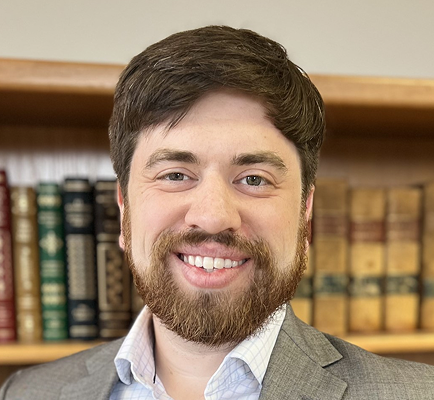
William P. Davies, Esq.
William P. Davies is a partner at Davies Law Firm and holds both a J.D. from Albany Law School, where he graduated magna cum laude, and a Heckerling L.L.M. in Estate Planning from the University of Miami School of Law. He is admitted to practice in both New York and Florida. His academic background includes published legal commentary, editorial roles with the Albany Law Review, and a Sponsler Fellowship recognizing exceptional academic achievement.
William P. Davies served as President of the Estate Planning Council of Central New York and has presented at continuing legal education programs throughout the state. His focus on Medicaid planning, irrevocable trusts, and estate administration provides clients with technical knowledge grounded in both scholarly research and practical application.
Trusted Experience: Over 10,000 PEOPLE Have Chosen Us to Protect Their Legacy with Living Trusts
The Davies Law Firm helped my 86 year old father create a Trust about two years before he passed. I was there for the entire process and Fred and Bill were very personable and listened to my father’s concerns…

My husband and I used Fred Davies to prepare our Wills, Trust, Health Care Proxies and Powers of Attorney. He and his staff are informative, professional and friendly, and we felt completely at ease with taking this…

My husband Ken and I highly recommend the Davies Law Firm. We first met them at a free seminar and quickly decided to work with them on our Living Trust…

How Does Medicaid Eligibility Work in New York?
Medicaid covers long-term nursing home care for individuals who meet strict financial eligibility requirements. In New York, a single person applying for nursing home Medicaid in 2026 through the Medically Needy Pathway can keep only $32,396 in countable assets and $50 per month in income. All income above $50 goes toward the nursing home cost, with Medicaid paying the difference.
Married couples face different rules under the Community Spouse Resource Allowance, which allows the spouse remaining at home to retain more assets and income.
Countable vs. Exempt Assets
Not all assets count toward Medicaid’s eligibility limits. Exempt assets include your personal belongings, household goods, and prepaid burial arrangements. According to New York Social Services Law Section 366, the home remains exempt as long as the applicant intends to return home or a spouse or disabled dependent lives there.
Countable assets include bank accounts, investment accounts, second homes, additional vehicles, and most other property. You must spend down countable assets to the eligibility limit before Medicaid approves coverage. Many families make costly mistakes during spend-down, such as gifting assets to children or making large purchases that don’t help qualification.
The Five-Year Look-Back Period
New York’s Medicaid program examines all financial transactions made within five years before your application date. Under 42 U.S.C. Section 1396p, any transfer of assets for less than fair market value during this period can result in a penalty period of Medicaid ineligibility. The penalty period is calculated by dividing the amount transferred by the regional average monthly nursing home cost.
It is also important to note that the Look-Back Period will also be implemented for Home and Community-Based Long-Term Care Services, also referred to as Community Medicaid, in New York. This includes home health care, adult day care, personal care assistance, and assisted living services. Unlike the five-year look-back for nursing home services, there will be a 30-month look-back for Community Medicaid. The implementation of this new policy was set to start in 2025, but detailed guidelines have yet to be released.
Key Takeaway: New York Medicaid limits single applicants to $32,396 in countable assets and reviews five years of financial transactions. Transferring assets during the look-back period triggers penalty periods calculated by dividing the transfer amount by the regional nursing home cost.
William P. Davies helps Onondaga County families navigate Medicaid eligibility requirements and avoid transfer penalties. Call (315) 472-6511 to discuss your planning timeline.
What Medicaid Planning Strategies Can Preserve Assets in New York?
Several legal strategies can help prevent unnecessary spend-down of assets while still qualifying for Medicaid. These strategies work best when implemented before needing nursing home care, ideally five years in advance. However, even in crisis situations when nursing home admission is imminent, an experienced attorney can often preserve some assets through spousal protections, compliant annuities, and proper spend-down techniques.
Spousal Protections
When one spouse needs nursing home care, federal law provides protections for the community spouse (the spouse remaining at home). The Community Spouse Resource Allowance allows the community spouse to keep 50% of the couple’s assets, up to $162,660 as of 2026. If 50% of the couple’s assets are under $74,820, the community spouse can retain all of their assets up to $74,820.
In addition, the community spouse is allowed to keep certain exempt (non-countable) assets, such as the homestead, one vehicle of any value, and all retirement accounts. The community spouse may also retain all income in their own name, plus a Monthly Maintenance Needs Allowance from the institutionalized spouse’s income if needed.
Medicaid annuity (NY Medicaid-compliant annuity)
A Medicaid-compliant annuity converts countable assets into an income stream that doesn’t affect eligibility. These annuities must be irrevocable, non-assignable, actuarially sound, and name the state as the primary or secondary beneficiary. When structured properly under New York Social Services Law Section 366, the annuity generates income that goes toward the nursing home cost but removes the principal from countable assets.
Spend-down on exempt assets (NY)
“Spend-down” in NY usually means using excess countable resources on permitted expenses until the person is within Medicaid’s resource rules—often prioritizing items Medicaid treats as noncountable/exempt (for example, certain home improvements, accessibility modifications, prepaid burial arrangements, etc.). This preserves value by repositioning resources into categories that Medicaid doesn’t count the same way.
Permissible spend-down methods include:
- Paying off debts and mortgages
- Making home repairs and accessibility modifications
- Purchasing irrevocable funeral trusts up to $15,000 per person
- Buying burial plots and prepaying funeral expenses
- Paying unreimbursed medical and dental expenses
- Replacing vehicles or purchasing necessary medical equipment
Caregiver agreement (NY personal services contract)
New York recognizes personal service contracts/caregiver agreements, but they’re scrutinized closely. NY guidance emphasizes a formal written agreement exchanging services for compensation (and, in practice, you want clear duties, rate, schedule, and good records).
Done poorly (e.g., vague terms, retroactive payments, weak documentation), payments can be treated like uncompensated transfers.
Pooled income trust (NY)
In New York, pooled trusts are a common tool for people who are income-over the limit for certain Medicaid pathways (especially community Medicaid/home care). NY DOH guidance explains that income directed to or deposited into a qualifying pooled trust can be disregarded in the Medicaid budget, and distributions to the person can count as income—so administration matters.
Operationally, NY practice often requires monthly deposits and proof of deposits to show the spend-down is being met through the trust mechanism.
The following table shows common Medicaid planning strategies and their timing requirements:
| Strategy | Best Timing | Purpose | Look-Back Impact |
|---|---|---|---|
| Spousal protections | During application | Preserve assets for community spouse | No penalty |
| Medicaid annuity | Crisis planning | Convert assets to exempt income | Must be compliant |
| Irrevocable trust | 5+ years before need | Remove assets from estate | 5-year transfer penalty if sooner |
| Spend-down on exempt assets | Anytime | Reduce countable assets legally | No penalty if fair value received |
| Caregiver agreement | Before need arises | Compensate family caregiver | Must be documented contract |
| Pooled income trust | During application | Shelter excess income | No penalty |
Key Takeaway: Spousal impoverishment protections, Medicaid-compliant annuities, and spend-down on exempt assets can help preserve resources. These strategies require careful structuring to avoid transfer penalties and must comply with New York regulations.
Davies Law Firm structures Medicaid planning strategies that comply with federal and state requirements. Contact Frederick P. Davies at (315) 472-6511 to review your options.
Fred Davies, Colonel, USAF (Ret.), served as a JAG officer and was the U.S. Air Force’s Estate Planning Subject Matter Expert.
Excellent Law Firm and I have enjoyed working with Fred and Bill Davies. I have mostly worked with Bill and found him, much like his father, to be very professional and responsive to my needs..

When I needed to move my mother from NY to FL to care for her and then find a nursing home facility nearby , applying for Medicaid became my responsibility…

Fred Davies and his team are friendly, attentive, and go out of their way to help their clients make the best decisions possible. Their guidance and explanations on setting up a revocable trust were very much…


How Does the Medicaid Application Process Work?
The Medicaid application process requires gathering extensive financial documentation and submitting a detailed application to the Onondaga County Department of Social Services Medicaid Office at 421 Montgomery Street in Syracuse. The entire process typically takes 45 to 90 days, though incomplete applications can take much longer.
The Department of Social Services examines every deposit and withdrawal during the five-year look-back period to identify potential transfer penalties. Common documents required include bank statements, investment account statements, life insurance policies, annuity contracts, property deeds, vehicle titles, and proof of burial arrangements.
Once approved, Medicaid coverage typically begins retroactively to the application date or up to three months before application if you were eligible during that time. The recipient must contribute nearly all their income toward the nursing home cost, keeping only $50 per month for personal needs. If married, the community spouse may receive a portion of the institutionalized spouse’s income through the Monthly Maintenance Needs Allowance.
Key Takeaway: Medicaid applications require five years of financial documentation and typically take 45-90 days for review. Applications must include proof of all assets, income, and financial transactions during the look-back period.
Davies Law Firm does not handle Medicaid applications directly, but we can connect you with professionals in Central New York who do. Call William P. Davies at (315) 472-6511 for guidance and a referral.
What Is a Special Needs Trust?
A special needs trust allows families to provide financial support for a disabled individual without disqualifying them from government benefits like Supplemental Security Income (SSI) and Medicaid. These trusts hold assets for the benefit of a disabled person while preserving their eligibility for need-based public assistance programs. According to 42 U.S.C. Section 1396p(d)(4), properly structured special needs trusts do not count as available resources for Medicaid or SSI purposes.
First-Party vs. Third-Party Special Needs Trusts
A first-party special needs trust, also called a self-settled trust, holds assets that belong to the disabled individual, such as personal injury settlements, inheritance, or accumulated earnings. Under New York Estates, Powers and Trusts Law Section 7-1.12, first-party trusts must be established before the beneficiary turns 65, must be irrevocable, and must include a Medicaid payback provision requiring any remaining funds at death to reimburse the state for benefits paid.
A third-party special needs trust holds assets contributed by someone other than the beneficiary, typically parents or grandparents, through estate planning. These trusts do not require Medicaid payback provisions, giving families more flexibility in how remaining assets are distributed after the beneficiary’s death. Parents often create third-party special needs trusts in their wills or revocable living trusts to provide for disabled children without affecting their eligibility for government benefits.
What Special Needs Trusts Can Pay For
Trust funds can pay for goods and services that improve the beneficiary’s quality of life beyond basic support provided by government benefits. Permitted expenses include supplemental medical care, dental treatment, therapy, personal care attendants, education, recreation, entertainment, vacations, electronics, furniture, and vehicle expenses. The trustee cannot distribute cash directly to the beneficiary or pay for food and shelter without potentially reducing SSI benefits.
In Syracuse and throughout Onondaga County, special needs trusts commonly pay for adaptive equipment, therapy not covered by Medicaid, transportation to medical appointments, and quality-of-life expenses like computers or recreational activities. The trustee manages the trust assets and makes distributions according to the trust terms while ensuring compliance with government benefit rules.
Key Takeaway: Special needs trusts preserve government benefits for disabled individuals while providing supplemental financial support. First-party trusts require Medicaid payback, while third-party trusts established by family members offer more flexibility in distributing remaining assets.
William P. Davies helps Central New York families establish special needs trusts for disabled children and adults. Call Davies Law Firm at (315) 472-6511 to discuss trust planning.
All of our clients have free phone calls for life
My husband and I had some questions about the wording of distribution of assets from our trust after our deaths. Since we now reside in TN, we scheduled a phone call with Attorney Bill Davies. He clearly…
Kathy Randall
Called inquiring about whether or not to hire a lawyer. Mr. Davies patiently listened to what I was explaining and offered me some suggestions to try before heading down a legal …

Fred Davies is a lawyer who cares about his clients. We worked with him on our trust and he was organized, supportive and helpful. He never hesitated to answer any questions that we …

Media Assets

Get Help from a Syracuse Elder Law Attorney Today
Decisions about Medicaid planning, guardianship, or addressing elder abuse affect your family’s financial security and your loved one’s quality of care. Waiting until a crisis occurs limits your options and may result in unnecessary asset spend-down or delays in obtaining the necessary authority to act.
Frederick P. Davies and William P. Davies of Davies Law Firm have helped Central New York families with Medicaid planning, estate planning, guardianship, special needs trusts, and elder law matters for decades. They work with the Onondaga County Department of Social Services and Surrogate’s Court to handle applications, appeals, and legal proceedings.
Call Davies Law Firm at (315) 472-6511 to schedule a consultation. The Syracuse office serves families throughout Onondaga County and Central New York. Davies Law Firm provides personalized guidance for Medicaid planning, incapacity planning, guardianship, and elder law matters that require immediate attention.
LET’S TALK ABOUT HOW WE CAN WORK TOGETHER
Ready to Move Forward? Schedule a Telephone Conference Today
Frequently Asked Questions About Elder Law in Syracuse
How much does nursing home care cost in Central New York?
Nursing homes in Syracuse and surrounding Onondaga County charge between $10,000 and $15,000 per month for private rooms. Semi-private rooms typically cost slightly less. These rates do not include prescription medications, personal care items, or specialized medical services. Over a year, costs range from $120,000 to $180,000, quickly depleting retirement savings for families paying privately.
What is the difference between Medicare and Medicaid?
Medicare is federal health insurance for people 65 and older that covers skilled care for up to 100 days following hospitalization. Medicaid is a need-based program that covers ongoing long-term custodial care in nursing homes after you meet strict financial eligibility requirements. Medicare does not cover long-term custodial care, which is what most nursing home residents need.
Do I need an elder law attorney for Medicaid or can I apply myself?
You can apply for Medicaid yourself, but the five-year look-back period, transfer penalty calculations, and documentation requirements create substantial risk of denial. Mistakes made during application or spend-down can cost tens of thousands of dollars in delayed benefits or unnecessary asset loss. Most families benefit from legal guidance, particularly when facing crisis situations or when substantial assets are involved.
Can I get paid to care for my elderly parent?
Yes, under a personal care agreement or caregiver contract. These agreements compensate family members for providing care services that would otherwise require paid caregivers. The contract must be in writing, signed before care begins, specify services and compensation rates, and actually be performed. Properly structured caregiver agreements do not trigger transfer penalties during the look-back period because you receive fair value for the payments. It is crucial to have the caregiver agreement drafted and reviewed by a lawyer and, if possible, an accountant to avoid any issues with taxes.
When should I consider guardianship for a parent with dementia?
Consider guardianship only when your parent lacks the capacity to execute powers of attorney and has no existing legal documents allowing someone to make decisions. If powers of attorney exist, guardianship may be unnecessary.
In Syracuse and throughout Onondaga County, special needs trusts commonly pay for adaptive equipment, therapy not covered by Medicaid, transportation to medical appointments, and quality-of-life expenses like computers or recreational activities. The trustee manages the trust assets and makes distributions according to the trust terms while ensuring compliance with government benefit rules.