
FREE LIVING TRUST & LONG TERM CARE
SEMINARS
Hamilton – Mar 10
Rome – Mar 11
Vernon – Mar 12
Table of Contents
ToggleLET’S TALK ABOUT HOW WE CAN WORK TOGETHER
Ready to Move Forward? Schedule a Telephone Conference Today







A living trust allows you to maintain control during your lifetime, avoid the lengthy probate process, plan for incapacity, and keep your estate matters private. Whether you’re concerned about protecting your home, managing out-of-state property, providing for minor children, planning for a loved one with special needs, or understanding how living trusts work with New York’s estate tax rules, this legal tool offers strategic advantages that a will alone cannot provide.
At Davies Law Firm, Syracuse living trust attorneys Frederick Davies and William Davies have helped Central New York families create comprehensive living trusts since 1993. Our estate planning lawyers can help you avoid these burdens while maintaining complete control over your assets.
This guide explains what a living trust is, how it differs from a will, the process of creating and funding your trust, and strategic ways to use trusts for blended families, minor children, and special situations. Call Davies Law Firm at (315) 472-6511 to schedule your telephone conference and start protecting your family’s future.
Over 10,000 PEOPLE Have Trusted Davies Law Firm
I needed some legal advice about my grandfathers home, and assets. The gentleman at Davie’s Law Firm answered all of my questions and helped get me on track! …

Contacted the Davies Law firm regarding our Estate Plan. Fred Davies thoroughly explained the intricacies of Living Will, Health Care proxies, Medicaid qualifications for Nursing Homes and provided guidance for…

I went to Davies’ Estate Planning Seminar with the not so positive attitude that I sometimes have…The seminar was extremely throughout and professionally presented. I decided …


A living trust is a legal document you create during your lifetime to hold and manage your assets. The term “living” means you establish the trust while you are alive, as opposed to a testamentary trust that is created through your will after death. The word “revocable” is equally important because it gives you complete control. You can change, amend, or cancel the trust at any time while you’re mentally competent.
When you create a living trust in New York, you transfer ownership of your assets into the trust’s name. You typically serve as your own trustee, maintaining full control over those assets just as you do now. Nothing changes in your day-to-day life. You can buy, sell, invest, and manage trust assets exactly as before. The difference comes when you pass away or become incapacitated. At that point, a successor trustee you’ve named can manage or distribute the assets without court involvement.
Living trusts have become increasingly popular among New Yorkers because they allow an estate to avoid the probate process when structured and funded properly. They also provide privacy, unlike wills, which become public records, and allow for seamless asset management if you become unable to handle your own affairs. You don’t need to be wealthy to benefit from a living trust. If you own a home, have retirement savings, or want to ensure your family avoids probate delays, a living trust can provide significant advantages.
NEARLY 4 DECADES CREATING ESTATE PLANS IN SYRACUSE
We went to a Living Trusts seminar in 2006 where we first met Fred Davies. After some insightful discussions with him, and as we wanted to protect our assets for our and our children’s’ futures …

Bill Davies could not have been more helpful after my mother’s passing. He walked us through everything we needed to know. Such a relief to have had his expertise on how to move forward with the trust. I still call…

I’m extremely satisfied with the Davies Law Firm. They have always been extremely professional and courteous and have answered my phone calls in a timely manner manner.

Reserve Your Seat at Our Next Free Estate Planning Seminar
Learn how to protect your family and your assets: no pressure, no obligation.

Understanding how a living trust works requires knowing three key roles: the trustor, the trustee, and the beneficiary. In most cases, especially at the beginning, you hold all three roles simultaneously.
The trustor is you, the person creating the trust and placing assets into it. You decide what property goes into the trust, who the beneficiaries are, and what instructions the trustee must follow. The trustee is the person or institution responsible for managing the trust property. During your lifetime, you typically serve as your own trustee, which means you retain complete control over all trust assets. You can open bank accounts, sell real estate, make investments, or take distributions whenever you wish.
The beneficiaries are the people or organizations you choose to receive benefits from the trust. During your lifetime, you are usually the primary beneficiary, meaning the trust exists for your benefit. After your death, your children, spouse, other relatives, or charities become the beneficiaries who receive the trust assets.
Here’s where the successor trustee becomes crucial. When you can no longer serve as trustee due to incapacity or death, a successor trustee you’ve named steps in to manage the trust. This person handles all trust assets, pays bills, manages investments, and eventually distributes property to your beneficiaries according to the instructions in your trust agreement. This transition happens immediately, without court involvement, which makes living trusts very effective.
Living trusts offer three primary benefits that make them particularly valuable for Syracuse families: avoiding probate, maintaining privacy, and planning for incapacity. Each of these advantages addresses real concerns that New Yorkers face when planning their estates.
When someone dies with a will in New York, their estate must go through probate at the local Surrogate’s Court. For Syracuse residents, this means filing documents at the Onondaga County Surrogate’s Court at 401 Montgomery Street. The probate process requires court supervision of asset distribution, which creates delays and expenses. During probate, assets titled solely in your name can be difficult to access quickly. Your family may be unable to sell real estate or distribute certain property until the Surrogate’s Court authorizes the executor to act
Costs add up quickly through court filing fees, legal fees, executor fees, and accounting expenses. A living trust bypasses probate entirely. Because the trust owns the assets, there is nothing for the Surrogate’s Court to handle when you die. Your successor trustee can distribute assets to beneficiaries within weeks without paying probate-related fees.
Surrogate’s Court filing fees are determined by estate value and are governed by SCPA § 2402. These fees can add to the overall cost of probate administration in New York.
Privacy is another significant advantage of living trusts. Once you file a will with the Surrogate’s Court for probate, it becomes a public record. Anyone can access your will to see what assets you owned, who your beneficiaries are, and how much each person received.
A living trust remains a private document. Because it doesn’t go through probate, it’s never filed with the court. Only the people you choose to inform, typically your trustee and beneficiaries, know the details of your estate.
Life is unpredictable. A serious illness, injury, or cognitive decline could leave you unable to manage your financial affairs. Without a living trust, your family may need to petition the court to appoint a guardian to handle your assets. Guardianship proceedings are expensive, time-consuming, and public. The court decides who manages your money, and that person must report regularly to the court.
A living trust can solve this problem directly. Your trust agreement can include instructions for determining when you’re incapacitated. Once incapacity is established, your successor trustee immediately assumes management of all trust assets. Bills get paid, investments are managed, and your care is funded, all without court involvement, delays, or public proceedings. This helps provide security for you and peace of mind for your family.
Fred Davies, Colonel, USAF (retired), former Estate Planning Subject Matter Expert for the U.S. Air Force.
My daughter hosted a seminar for The Davies Law firm in 2002 and my husband and I attended. At the time, we worked with Fred and his team to put a plan in place…

The Davies Law firm has been a great help to us in dealing with some of the intricacies of the law. They have always been courteous and well informed and prompt to respond to our calls…

After hearing Fred Davies at a trust seminar, my husband and I worked with the firm to set up a trust. It was a very good experience. Everyone was very helpful, courteous, knowledgeable and efficient. Recently a friend…


Frederick P. Davies is the founding partner of Davies Law Firm and brings decades of legal experience rooted in distinguished military service. After graduating from the Syracuse University College of Law in 1985, he entered the U.S. Navy Judge Advocate General’s Corps, where he began his career in estate planning and litigation. His military career spanned nearly three decades across multiple branches, culminating in his role as the Estate Planning Subject Matter Expert for the U.S. Air Force. Colonel Davies (Ret.) established Davies Law Firm in 1993 to focus exclusively on living trusts, estate planning, and elder law.
Since founding the firm, Frederick Davies has helped over 10,000 Central New York families create comprehensive estate plans. He has delivered over 1,000 presentations on topics including Medicaid planning, estate taxes, and elder care throughout the region. He is an active member of the American Bar Association and the Estate Planning Council of Central New York. His military background provides a foundation of discipline and precision that informs his approach to every client matter.
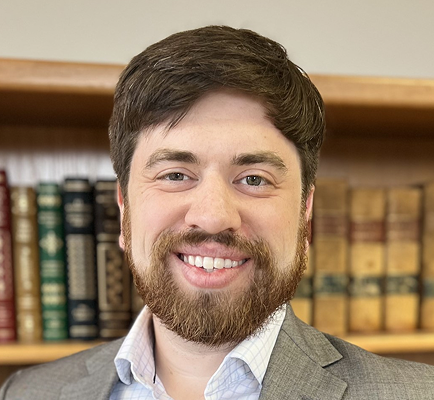
William P. Davies is a partner at Davies Law Firm and has contributed to the firm’s work since his teenage years. A magna cum laude graduate of Albany Law School, he later earned an L.L.M. in Estate Planning from the University of Miami School of Law. Mr. Davies is admitted to practice in both New York and Florida, allowing him to assist clients with multi-state planning concerns. He focuses his practice on wills, living trusts, tax strategies, and estate administration.
In addition to his legal practice, William Davies is deeply involved in the legal community. He served as President of the Estate Planning Council of Central New York and has presented at numerous legal education events across New York. His scholarly work includes published legal commentary, law surveys for the Syracuse Law Review, and editorial roles with the Albany Law Review.
Reserve Your Seat
Free Seminar on Living Trusts & Long Term Care
Trusted Experience: Over 10,000 PEOPLE Have Chosen Us to Protect Their Legacy with Living Trusts
The Davies Law Firm helped my 86 year old father create a Trust about two years before he passed. I was there for the entire process and Fred and Bill were very personable and listened to my father’s concerns…

My husband Ken and I highly recommend the Davies Law Firm. We first met them at a free seminar and quickly decided to work with them on our Living Trust…

My husband and I used Fred Davies to prepare our Wills, Trust, Health Care Proxies and Powers of Attorney. He and his staff are informative, professional and friendly, and we felt completely at ease with taking this…


Many people wonder whether they need a living trust if they already have a will, or vice versa. While both documents allow you to direct where your property goes after death, they function very differently and serve distinct purposes.
A will is a legal document that only takes effect after you die. It provides instructions for distributing your assets, but those instructions must be carried out through the probate process under the Surrogate’s Court supervision. During your lifetime, a will provides no help with asset management. If you become incapacitated, the will alone offers no guidance or authority for managing your affairs.
A living trust, on the other hand, is active the moment you sign it and fund it with your assets. The trust provides a framework for managing your property during your lifetime, especially if you become incapacitated. When you die, assets in the trust can transfer directly to your beneficiaries without probate court involvement. This fundamental difference, active now versus active only after death, creates several practical distinctions.
The table below summarizes the key differences:
| Factor | Will | Living Trust |
|---|---|---|
| When Active | After death only | Immediately upon signing |
| Probate Required | Yes (often months to a year+ depending on complexity) | No |
| Privacy | Public record | Remains private |
| Incapacity Planning | No provisions | Successor trustee manages assets |
| Control During Life | None | Full control, can modify anytime |
| Upfront Cost | Lower | Higher |
| Long-term Cost | Higher (probate fees) | Lower (no probate) |
It’s important to note that having a living trust doesn’t necessarily mean you don’t need a will. The living trust holds the bulk of your assets and avoids probate, while a pour-over will serves as a safety net and allows you to name guardians for minor children.
Key Takeaway: Wills only take effect after death and require probate. Living trusts are active immediately, avoid probate, and provide incapacity planning. Most people benefit from having both a living trust and a pour-over will.
A pour-over will is a special type of will that works in conjunction with your living trust. Its purpose is to “catch” any assets you own at death that were not transferred into your trust during your lifetime. Even with careful planning, you might forget to retitle an asset, or you might acquire new property shortly before death that never made it into the trust. The pour-over will ensures these stray assets don’t fall through the cracks.
When you die, the pour-over will directs that all remaining assets in your individual name “pour over” into your existing living trust. From there, those assets are distributed according to your trust instructions, alongside everything already in the trust. This creates a single, unified plan for all your property.
However, assets passing through a pour-over will must go through probate, just like any other will. But because the pour-over will is designed to catch only forgotten or last-minute assets, the probate process is typically much faster and less expensive than it would be for a full estate. The bulk of your property has already been transferred to your trust and avoids probate entirely.
A pour-over will also serves another crucial function that your living trust cannot: naming guardians for minor children. In New York, parents typically nominate a guardian for minor children in a will. If you have children under eighteen, you must use a will to name the person who will care for them if something happens to you. This is another reason why most estate plans include both a living trust and a pour-over will.
Key Takeaway: A pour-over will catches any assets not in your living trust and directs them into the trust after your death. It also allows you to name guardians for minor children, which a trust cannot do. While pour-over assets go through probate, the process is typically faster because most of your estate is already in the trust.
Fred Davies, Colonel, USAF (Ret.), served as a JAG officer and was the U.S. Air Force’s Estate Planning Subject Matter Expert.
Excellent Law Firm and I have enjoyed working with Fred and Bill Davies. I have mostly worked with Bill and found him, much like his father, to be very professional and responsive to my needs..

Fred Davies and his team are friendly, attentive, and go out of their way to help their clients make the best decisions possible. Their guidance and explanations on setting up a revocable trust were very much…

When I needed to move my mother from NY to FL to care for her and then find a nursing home facility nearby , applying for Medicaid became my responsibility…

Creating a living trust involves several steps, from initial conference through signing and funding. The process is straightforward, but attention to detail matters. Here’s what to expect when you work with an estate planning attorney in Syracuse.
Your journey begins with a telephone conference where you discuss your goals, assets, and family situation. An attorney will ask about your real estate holdings, bank and investment accounts, business interests, and any special concerns like blended family dynamics or special needs planning. This conversation helps identify the best trust structure for your circumstances. You’ll discuss who should serve as successor trustee, how you want assets distributed, and whether you have concerns about estate taxes or creditor protection.
Bring information about your assets to this meeting: deeds, account statements, business documents, and lists of valuable personal property. Your attorney will need a complete picture of what you own to design a trust that covers everything. You’ll also discuss your beneficiaries and any specific instructions about timing or conditions for distributions.
After the initial conference, your attorney drafts a trust agreement customized to your goals and situation. This is not a fill-in-the-blank form. Every living trust is unique because every family’s circumstances are different. The trust document will name you as trustor and trustee, identify your successor trustees, name your beneficiaries, and provide detailed instructions for managing and distributing assets.
This is the most important step, and unfortunately, it’s the one people sometimes neglect. A trust that isn’t funded is just a stack of papers. Funding means transferring ownership of your assets from your individual name to the trust’s name.
Bank and investment accounts must be retitled or transferred to the trust. Your attorney can help communicate with each financial institution to change the account ownership. Some institutions allow you to simply change the name on existing accounts; others require opening new accounts in the trust’s name and transferring funds.
Business interests require special attention. If you own an LLC or partnership interest, you’ll need to update the ownership records with the company. For closely held corporations, you may need to issue new stock certificates in the trust’s name. Personal property like vehicles, jewelry, and artwork can be transferred through a simple assignment document rather than retitling each item individually. Davies Law Firm provides assistance throughout the trust estate plan creation process, including the funding stage, to avoid issues down the line.
Selecting the right successor trustee is one of the most important decisions you’ll make. This person will manage all trust assets if you become incapacitated and will distribute your estate after you die. You need someone who is responsible, organized, good with finances, and trustworthy. Many people choose an adult child, sibling, or close friend. Some people name co-trustees to share the responsibility or provide checks and balances.
You can also name a professional trustee, such as a bank trust department or trust company. Professional trustees charge fees but bring expertise and objectivity. This can be particularly valuable for complex estates or situations where family dynamics might create conflicts. You can also name a series of successor trustees, if your first choice cannot serve, your second choice takes over, and so on.
Consider whether your chosen trustee lives in Central New York. While it’s not required, having a local trustee can make administration easier, especially when dealing with Onondaga County property or local financial institutions.
Funding your trust or transferring assets into it, determines whether the trust actually works. Most types of property can and should be transferred into your living trust to avoid probate and enable smooth succession planning.
Real estate is often the most valuable asset people own, and it should be transferred into your trust. This includes your primary residence, vacation homes, rental properties, and undeveloped land. Transfer is accomplished through a deed that conveys the property from your individual name to your name as trustee.
Bank accounts, checking, savings, money market accounts, and certificates of deposit should be retitled in the trust’s name or, alternatively, made payable on death to your trust. Most banks can handle trust retitling with minimal paperwork. Investment accounts, including brokerage accounts, stocks, bonds, and mutual funds, should also be transferred to the trust. Your financial advisor or brokerage firm can facilitate this process.
Business interests require careful attention. If you own an LLC membership interest, partnership interest, or shares in a closely held corporation, these can typically be transferred to your trust. However, you should review any operating agreements, partnership agreements, or shareholder agreements first. Some agreements restrict transfers, even to your own trust, or require consent from other owners. Your attorney can review these documents and advise on the proper transfer method.
Many types of personal property (like household furnishings, jewelry, art, and collectibles) can be transferred through a general assignment. Titled assets such as vehicles and boats usually require retitling through the appropriate agency.
Certain assets typically should not be transferred into a living trust. Retirement accounts, IRAs, 401(k)s, 403(b)s, and pension plans have their own beneficiary designation systems and receive special tax treatment.
You generally do not retitle retirement accounts (IRAs, 401(k)s, 403(b)s) into a living trust. Instead, you typically keep them in your name and use beneficiary designations. In some situations, naming a properly drafted trust as a beneficiary may make sense, but it can have tax and distribution implications, so it should be reviewed as part of your overall plan.
Key Takeaway: Most assets should be transferred into your living trust, including real estate, bank accounts, investment accounts, business interests, and valuable personal property. Retirement accounts and HSAs should not be transferred into the trust but can name the trust as beneficiary.
One of the most valuable features of a revocable living trust is right there in the name: revocable. This means you can change, amend, or completely cancel your trust at any time, as long as you are mentally competent. You are not giving up control or locking your assets away. You maintain complete flexibility to adapt your estate plan as your life circumstances change.
If you need to make minor changes: updating a beneficiary, changing a distribution percentage, or replacing a successor trustee, your attorney can prepare an amendment. A trust amendment is a written document that modifies specific provisions of your original trust while leaving everything else intact. The amendment must be executed with the same formalities as the original trust (typically notarization) and becomes part of your trust documentation.
For more substantial changes, attorneys often recommend a restatement rather than multiple amendments. A restatement completely replaces the text of your original trust document while keeping the same trust name and date. This is useful when you want to make numerous changes or when your original trust is many years old, and you want updated provisions. Restatement keeps all your assets in the trust, but gives you a fresh, clean document to work with.
If you decide you no longer want a living trust at all, you can revoke it entirely. Revocation requires transferring all assets back into your individual name and signing a written revocation document. People rarely revoke living trusts entirely, but circumstances can change. Perhaps you move to a state with different estate planning considerations, or your estate becomes simple enough that a will alone suffices.
By contrast, the robust asset protection provided by an irrevocable living trust stems precisely from the fact that you give up this easy, unilateral control. Because you cannot simply change your mind and take the assets back, creditors cannot force you to do so either.
However, a common misconception is that irrevocable trusts are permanently set in stone. Under New York law, they can be changed or canceled, but it involves a difficult and strict legal process. Under New York Estates, Powers and Trusts Law (EPTL) § 7-1.9, the creator of an irrevocable trust can amend or revoke it only by obtaining the written, acknowledged consent of every single beneficiary. This can be a major hurdle if beneficiaries are minors, unborn, or uncooperative. Alternatively, New York allows a complex process called “decanting” (under EPTL § 10-6.6), where an authorized trustee effectively pours the assets from the outdated irrevocable trust into a brand-new trust with modified terms. These processes are intentionally difficult, which is exactly why the asset protection shield remains so strong.
You should review your living trust every three to five years and update it whenever major life events occur. Marriage or divorce, birth or adoption of children, death of a beneficiary or trustee, significant changes in asset values, moving to another state, or changes in estate tax laws all warrant a trust review.
Key Takeaway: You can change your living trust through amendments, replace it entirely through restatement, or cancel it by revoking the trust and transferring assets back to your name. You should review your trust every three to five years and update it after major life changes.
This is one of the most common questions about living trusts, and the answer surprises many people: no, a revocable living trust by itself does not reduce estate taxes. Because you retain complete control over the trust and can revoke it at any time, the IRS and New York State count all trust assets as part of your taxable estate for estate tax purposes.
However, most New York estates are not subject to estate tax in the first place. For deaths in 2026, New York’s basic exclusion amount is $7,350,000, and the federal filing threshold is $15,000,000 per person (indexed for inflation). If your total estate, including all assets in your living trust, retirement accounts, life insurance, and everything else you own, is below these thresholds, no estate tax is owed whether you have a trust or not.
New York’s estate tax is known for a ‘cliff’ because the available credit is phased out once the taxable estate exceeds 105% of the basic exclusion amount, meaning estates just above the threshold can face a much larger tax bill than expected.
For married couples, living trusts can be structured with tax-saving provisions even though the trust itself doesn’t reduce taxes. An A/B trust (also called a credit shelter trust or bypass trust) splits into two trusts at the first spouse’s death. One trust holds assets up to the exemption amount for the deceased spouse, preserving that exemption. The other trust holds the remaining assets for the surviving spouse. This structure allows both spouses’ exemptions to be used, potentially sheltering up to $14,700,000 from New York estate tax (2 × the 2026 basic exclusion amount), depending on the couple’s assets and plan design.
Disclaimer trusts offer another approach. When the first spouse dies, the surviving spouse has a window of time (typically nine months) to “disclaim” or refuse some or all of the inheritance. Disclaimed assets pass into a trust for the benefit of the surviving spouse and children, using the deceased spouse’s estate tax exemption. This strategy provides flexibility because the disclaimer decision is made after death, when actual tax liability and financial needs are known.
It’s important to understand that estate tax planning and probate avoidance are two separate goals. A living trust primarily helps you avoid probate. If you need estate tax reduction, that requires additional planning, potentially including irrevocable trusts, gifting strategies, or life insurance planning.
Living trusts are remarkably flexible tools that can be customized to address unique family situations and planning goals. Beyond simple probate avoidance, trusts can solve specific problems that wills cannot handle as effectively.
Blended families, where one or both spouses have children from prior marriages, face special challenges in estate planning. You want to provide for your current spouse, but you also want to ensure your children from your first marriage ultimately receive their inheritance. A simple will leaving everything to your spouse might leave your children vulnerable if the surviving spouse later changes their will or remarries.
A living trust can address this by providing for your spouse during their lifetime while ensuring your children eventually receive the assets. The trust might give your surviving spouse the right to live in the family home, receive income from trust investments, or access principal for health and maintenance needs. When your spouse passes away, the remaining trust assets go to your children. This structure protects both your spouse and your children, reduces the potential for family conflicts, and ensures your wishes are honored.
If you have minor children, a living trust can hold assets for them until they reach an age when you feel they’re ready to manage money responsibly. Many parents are uncomfortable with the idea of an eighteen-year-old receiving a substantial inheritance with no restrictions. Your trust can specify that distributions be made gradually, perhaps one-third at age twenty-five, half the remainder at thirty, and the balance at thirty-five.
The trust can also provide instructions for how trust funds should be used for your children before final distribution. You might direct the trustee to pay for education expenses, medical care, housing, or business startup costs. This ensures your children’s needs are met while preventing impulsive or unwise spending. Without a trust, if you die while your children are minors, a court-appointed guardian would control their inheritance until they turn eighteen, at which point they’d receive everything outright.
Many Syracuse families own vacation homes, rental properties, or family land in other states. If you own real estate in multiple states and die with only a will, your family must go through a separate probate proceeding called ancillary probate in each state where you own property. This means hiring attorneys in multiple states, paying court costs in multiple jurisdictions, and dealing with different state laws and timelines.
A living trust solves this problem entirely. When real estate in Florida, South Carolina, or any other state is transferred into your Syracuse-based living trust, it avoids probate in that state. Your successor trustee can transfer all properties, regardless of location, according to your trust instructions, without multiple court proceedings. This saves your family thousands of dollars in legal fees and many months of administrative burden.
If you have a child or other loved one with disabilities who receives Medicaid, Supplemental Security Income (SSI), or other means-tested government benefits, leaving them a direct inheritance could disqualify them from these crucial programs. An inheritance of even a few thousand dollars can make someone ineligible for benefits that pay for medical care, housing, and other support services.
Your living trust can include provisions to create a supplemental needs trust (SNT) upon your death. The SNT allows your loved one to receive their inheritance without losing government benefits. Trust funds can pay for expenses not covered by government programs: education, recreation, therapy, transportation, personal care items, and quality-of-life enhancements, while preserving eligibility for Medicaid and SSI. The trustee manages these distributions carefully to ensure compliance with complex government benefit rules.
Key Takeaway: Living trusts can be customized for blended families (providing for spouse while protecting children’s inheritance), minor children (distributions at specific ages with guidance on use), out-of-state property (avoiding multiple probate proceedings), and special needs planning (preserving government benefit eligibility).
Understanding trustee responsibilities helps you choose the right successor trustee and prepare them for their eventual role. A trustee has significant legal duties under New York law, and fulfilling these duties properly ensures your trust works as intended.
During your lifetime, while you serve as your own trustee, your duties are straightforward: manage the trust assets responsibly, as you would manage your own property (which is exactly what they are). Keep reasonable records of transactions, investments, and distributions. Because you are both the trustee and the beneficiary, there are no conflicts of interest or reporting requirements.
When your successor trustee takes over, either because you’ve become incapacitated or after your death, their responsibilities become more formal. A successor trustee has a fiduciary duty, meaning they must act in the best interests of the beneficiaries, not their own interests. They must be loyal, impartial if there are multiple beneficiaries, and prudent in managing trust assets.
Specific duties include:
This list can seem overwhelming, but remember that the trustee can hire professionals to help. Trust funds can pay for attorneys, accountants, financial advisors, and other experts. Your successor trustee doesn’t need to be an investment expert or tax specialist, they just need to be responsible enough to recognize when they need help and willing to seek it.
Choose someone organized, financially responsible, trustworthy, and willing to serve. Many people name an adult child, but you can also choose a sibling, a trusted friend, or a professional trustee. Some people name co-trustees to provide checks and balances or divide responsibilities.
Key Takeaway: A successor trustee must inventory assets, manage investments, pay debts and taxes, distribute assets to beneficiaries, keep records, and communicate with beneficiaries. While these duties are significant, the trustee can hire professionals for assistance, with costs paid from trust funds.
Media Assets
We’ve Helped Over 10,000 PEOPLE Plan Smarter
The Davies Law Firm is way more than you expect from any lawyer. Fred is very thorough and that’s an understatement. He is very informative and always available to help. They set up our Living Trust…

The Davies Law Firm handled the closing of the sale of our family home after the death of our dad. Everyone involved made a very difficult situation as painless as possible…

My Dad choose the Davies Law Firm to set up a Family Trust so when the day came all would be in order and our family could avoid the long probate process – Everything was in order…


Davies Law Firm provides living trust and estate planning services to families throughout Central New York. We serve clients in the following communities:
If you live in Central New York and need help creating a living trust to protect your assets and family, we can assist. Call (315) 472-6511 to schedule your telephone conference with our Syracuse estate planning team.
All of our clients have free phone calls for life
My husband and I had some questions about the wording of distribution of assets from our trust after our deaths. Since we now reside in TN, we scheduled a phone call with Attorney Bill Davies. He clearly…
Kathy Randall
Called inquiring about whether or not to hire a lawyer. Mr. Davies patiently listened to what I was explaining and offered me some suggestions to try before heading down a legal …

Fred Davies is a lawyer who cares about his clients. We worked with him on our trust and he was organized, supportive and helpful. He never hesitated to answer any questions that we …


Creating a living trust is an important decision that affects your family’s future. You want to ensure your assets are protected, your wishes are honored, and your loved ones are spared from unnecessary probate delays and costs. A well-designed trust provides this protection while giving you complete control during your lifetime.
Frederick Davies has helped Central New York families create comprehensive living trusts for nearly 40 years. At Davies Law Firm, our estate planning lawyers handle every step of the process. We work with clients throughout Syracuse, prepare documents for filing at the Onondaga County Surrogate’s Court when necessary, and provide ongoing support as your life circumstances change.
Call Davies Law Firm at (315) 472-6511 to schedule your telephone conference. We serve families throughout Onondaga County, Madison County, Oneida County, Cortland County, Oswego County, Cayuga County, and all of Central New York. Let us help you protect your legacy and provide peace of mind for your family.
LET’S TALK ABOUT HOW WE CAN WORK TOGETHER
Ready to Move Forward? Schedule a Telephone Conference Today
Creating a living trust raises many questions. Below are answers to the most common questions we hear from Syracuse families about living trusts, probate, costs, and the creation process. If you have additional questions, call Davies Law Firm at (315) 472-6511.
A will only takes effect after death and must go through probate. A living trust is active immediately, avoids probate, and manages assets during your lifetime. Wills require probate (lengthy and expensive), become public records, and provide no incapacity planning. Trusts avoid probate, remain private, and allow successor trustees to manage assets if you become incapacitated. Most people with living trusts also have a pour-over will as a safety net. See the comparison table above for detailed differences.
Yes, you should have a pour-over will. It catches assets you forgot to transfer into your trust and directs them into the trust after death. More importantly, it allows you to name guardians for minor children, which a trust cannot do. Assets passing through a pour-over will must go through probate, but the process is faster because most of your estate is already in the trust.
Yes, most people serve as trustees of their own living trusts, maintaining full control over assets. To ensure a seamless transition, you must name a successor trustee who manages the trust when you become incapacitated or after you pass away. Choose someone responsible, organized, and trustworthy, often an adult child, sibling, or professional trustee.
Your successor trustee takes over, inventories assets, pays debts and taxes, then distributes assets to beneficiaries according to your trust instructions. Because living trusts avoid probate, beneficiaries often receive their inheritance within weeks rather than waiting over a year. There are no court fees or public filings. Your trust can also continue to hold assets after your death if you’ve included those instructions. For example, holding inheritance for minor children until they reach specific ages.
No, a living trust by itself does not reduce estate taxes. However, most New York estates do not owe tax. In 2026, the New York exemption is $7,350,000, and the federal exemption is $15,000,000. If your estate is below these thresholds, no tax is due. For larger estates, we can structure trusts to maximize both spouses’ exemptions, potentially protecting up to $14.7 million from New York taxes.
Yes, you can change, amend, or completely revoke your living trust anytime while mentally competent. Minor changes are handled through amendments. Major changes use a restatement that replaces the trust text while keeping the same trust name. To revoke entirely, transfer assets back to your name and sign a revocation document. Review your trust after marriage, divorce, births, deaths, major asset changes, or relocating to another state.
Transfer most assets into your trust: real estate (home, vacation property, rentals, land), bank accounts, investment accounts, and business interests. Personal property like vehicles, jewelry, and art can be transferred through a general assignment document. Do NOT transfer retirement accounts (IRAs, 401(k)s) or Health Savings Accounts. Keep these in your name, but you can name the trust as the beneficiary. Your attorney will guide you on each asset type.
If you want to avoid probate, maintain privacy, and plan for incapacity, you need a living trust. Wills must go through probate (lengthy and costly) and become public records. Wills provide no help if you become incapacitated. Living trusts avoid probate, remain private, and allow successor trustees to manage assets immediately if you’re incapacitated. The ideal estate plan includes both a living trust for most assets and a pour-over will for guardianship and safety net purposes.
A revocable trust can be changed or canceled anytime. An irrevocable trust cannot be modified once created. With a revocable trust, you maintain full control and access to assets. With an irrevocable trust, you give up ownership and control. Revocable trust assets remain in your taxable estate; irrevocable trust assets are removed from your estate. Revocable trusts are used for probate avoidance and incapacity planning. Irrevocable trusts are used for asset protection, Medicaid planning, or estate tax reduction for high-net-worth families.
No, a revocable living trust does not protect your assets from your creditors during your lifetime. Because you control the trust and can revoke it anytime, creditors can reach those assets. After your death, trust assets passing to beneficiaries may have some protection if the trust includes spendthrift provisions. If asset protection from your own creditors is your goal, you would need an irrevocable trust, which requires permanently giving up control.
Your attorney prepares a new deed transferring ownership from your name to your name as trustee. The deed is notarized and recorded with the county clerk where the property is located. If you have a mortgage, notify your lender. Federal law generally restricts the enforcement of ‘due on sale’ clauses for certain transfers into an inter vivos trust where the borrower remains a beneficiary and occupancy rights don’t change.
In many cases, transferring real estate to your own revocable trust is treated as a change in the form of ownership without a change in beneficial ownership. When structured properly, it may qualify for exemptions from certain transfer taxes, but your attorney will confirm the correct filings and exemptions for your situation.
A pour-over will catches assets not in your living trust and transfers them into the trust after your death. Yes, you should have one as a safety net. It also allows you to name guardians for minor children, which your trust cannot do. New York law requires guardian nominations in a will. Assets passing through a pour-over will must go through probate, but the process is faster because most assets are already in the trust.
Yes, a living trust is excellent for incapacity planning. If you become unable to manage finances due to illness, injury, or cognitive decline, your successor trustee immediately manages all trust assets without court involvement. A will provides no help during incapacity. Without a trust, your family would need to petition the court for guardianship. It is expensive, time-consuming, and public. Your trust avoids this by allowing your successor trustee to handle everything privately according to your instructions.
A living trust avoids probate because the trust, not you, owns the assets. When you die, there’s no transfer of ownership, so there’s nothing for the Onondaga County Surrogate’s Court to handle. Your successor trustee distributes trust assets directly to beneficiaries according to your instructions. No court supervision, no court fees, no public filings. The process is private and typically completed within weeks. Only assets in your individual name at death go through probate, which is why funding your trust properly is critical.
Placing out-of-state real estate in your living trust avoids ancillary probate in each state where you own property. Without a trust, your family would need separate probate proceedings in every state, hiring multiple attorneys, paying court costs in each jurisdiction, and dealing with different state laws. Your Syracuse-based living trust can hold properties anywhere in the United States, creating a single ownership structure. Your successor trustee can transfer all properties without any probate proceedings, saving thousands in legal fees.